成吉思汗
气膜“罩”住尘与噪 施工无惧风和雨_我的网站

一 |
8月20日航拍的保定市西大园110千伏变电站新建工程基坑气膜。
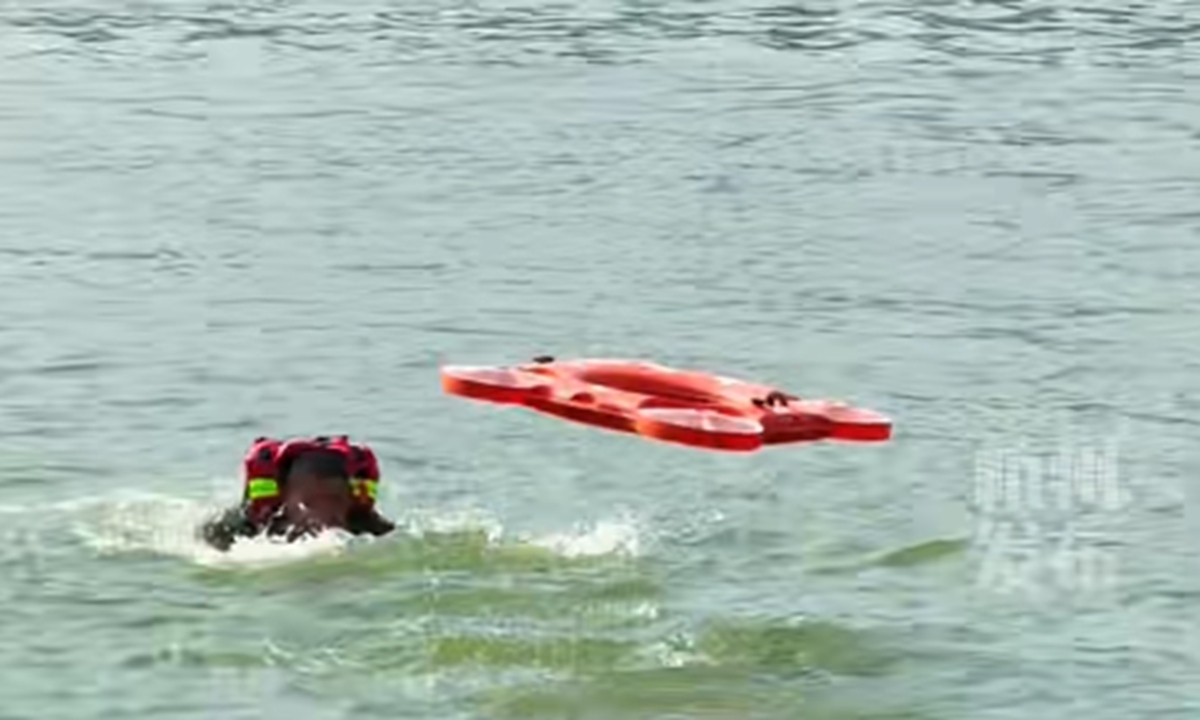
The "flying lifebuoy" debuts during a water rescue drill in Hangzhou, East China's Zhejiang Province. Photo: Official WeChat account of the Hangzhou governmentA "flying lifebuoy" recently made its debut during a water rescue drill organized by police in Hangzhou, East China's Zhejiang Province, as the city explores multiple high-tech solutions to improve emergency response in water accidents. The device received praise from a Chinese Foreign Ministry spokesperson.
According to a report posted on the official WeChat account of Hangzhou, an orange lifebuoy took off from the shore during the drill, flew toward a person who had fallen into the water, and landed on the water surface. Even when the person climbed onto it, the device remained stable and continued to float.
Minutes later, rescuers arrived and brought the person to safety. The lifebuoy then took off again and returned to its original location.
The device, officially called an AI intelligent flying rescue robot, is designed to provide rapid assistance in open waters where rescue boats may take time to arrive. Equipped with an autonomous navigation system, it can fly to people in distress, provide buoyancy support, and return automatically after completing its mission.
The drill featured multiple water rescue scenarios and tested several intelligent rescue technologies. Drones were used to drop inflatable lifebuoys above people in distress, which quickly inflate upon hitting the water to provide temporary buoyancy.
Another system combined an unmanned boat and drone for rescue operations in dangerous waters. The drone searches and locates people in need, while the boat navigates autonomously to assist the rescue. The drone can also provide lighting for nighttime searches, according to the report.
Chinese Foreign Ministry spokesperson Lin Jian highlighted in a social media post on August 14 that the AI-powered device is "technology that could help save lives."
Global Times
。受访者供图8月21日,从保定火车站西广场向西望去,一座巨大的银白色“帐篷”格外醒目。这可不是什么场馆,而是保定市西大园110千伏变电站新建工程的施工现场。

二 | “这个‘帐篷’叫基坑气膜,采用充气密闭结构,能将整个作业面包裹得严严实实。”该项目负责人麻石磊说,保定市西大园110千伏变电站新建工程,是首个采用基坑气膜全封闭施工技术的电力项目。目前,该项目的土建施工已完成总工程量的70%,预计年底前建成。把工地藏进“帐篷”里,是因为项目地处闹市区,居民小区、商业网点环绕四周,扬尘治理、噪声管控的标准高,加上施工时间仅3个多月,又赶上主汛期,遭遇强降雨会影响施工进度。经多方论证,项目方最终选择了基坑气膜全封闭施工方案,既能防尘降噪,又能在雨季不间断施工。“气膜总覆盖面积3638平方米,由两块模体拼接而成,重量超33吨,一旦被大风吹走,后果不敢想象。”麻石磊说,传统气膜拼接普遍采用烫粘、魔术贴搭接工艺。为保障安全,他们采用栓接工艺,利用1100余颗螺栓将两块模体固定在一起,外面再加魔术贴进行二次密封。

三 | 同时,在气膜外部安装包封阻拦索“兜”住膜体,使基坑气膜能抵御12级强风。

四 | 防尘降噪的效果怎么样?记者站在距基坑气膜几十米的空地上,看不到施工扬尘逸散,也听不到设备轰鸣。“大型机械作业的轰鸣声被‘捂’在气膜内。”麻石磊说,监测数据显示,这项技术可阻隔90%以上施工扬尘、降低80%施工噪音。走进气膜内部,眼前豁然开朗,比半个足球场还大的空间内无梁无柱。几台挖掘机正在进行土方回填作业,工人站在高空作业平台上,为新建工程的钢结构喷涂防火层。

五 | “气膜内部高度为22米,吊车、泵车、曲臂车等大型机械能自由通行。”麻石磊说,气膜能稳稳“站”住,靠的是一套完备的安全保障体系——两套鼓风机系统一用一备,使用双路电源,一旦停电,应急发电机立即启动,可快速补压,保障气膜结构稳定。施工现场虽然是密闭空间,但与室外相比并不闷热。“这是风机和空调的功劳。”麻石磊说,他们在气膜内安装了4台工业空调、4套送风系统,同时配备智能温控系统和气体检测设备,实时监控气膜内部的温度、湿度、氧气含量、有毒气体浓度等,为工人营造安全舒适的作业环境。保障施工进度,是基坑气膜的另一大优势。6月25日基坑气膜启用后,降雨、大风等因素都没有影响施工进度。

六 | “要是没有它,今年这雨情,我们至少要停工45天,排水、清淤等费用少说也得70万元。”麻石磊说。

七 | (日报记者 徐 华)。
Current article:http://462shvg.loukachunwenghongchuikui.shop/news/20260826_3924696.html
Published on:00:14:31